

BLOG
Application Season Starts Strong: Understanding the Common App and Activities Section
Application Season Starts Strong: Understanding the Common App and Activities Section
Application season is an exciting milestone for families. For students, it is the moment years of hard work begin to come together. For parents, it often raises questions about deadlines, essays, and where to begin.
One of the most common starting points is the Common App.
Used by hundreds of colleges and universities, the Common App allows students to apply to multiple schools through one main platform. It can save time, reduce duplicate work, and create a more organized path through the admissions process.
The Activities Section Is More Important Than Many Realize
Families often focus heavily on grades and essays, but the activities section can be just as valuable.
This area gives admissions teams a clearer picture of how a student spends time outside the classroom.
Think about all the ways your student spends their time outside of school:
Clubs and organizations (in and out of school)
Athletics
Part-time jobs
Volunteer work
Family responsibilities
Creative pursuits
Leadership roles
Outside community involvement
This is where students show initiative, empathy, and their interests that their school transcripts alone cannot explain. In other words, this is where the individuality of the student shines.
Quality Over Quantity
A common college admissions myth is that students need endless activities to compete.
Not true. The Common Application only has 10 spots for activities. And, no, a student does NOT have to fill in all 10 spots if they don’t have 10 significant activities to share.
Admissions officers are usually more interested in the quality of their commitment, growth, and their impact rather than a long list of random memberships.
For example, a student who helped lead one club for three years may stand out more than someone who has joined eight groups during their high school years with little involvement or growth to show for their time in the activities.
Avoiding the “too many extracurriculars” trap helps students present a more authentic story by allowing time to explore the activities that mean the most to them. Their choice of activities defines who they are and what they care about.
How to Build a Strong Activities List
Students should focus on depth of involvement and growth - what did they learn or how did they grow from these activities? Why were they important enough to stay with them over time?
Instead of simply writing “member of debate club,” a student can explain contributions:
Competed in regional tournaments (out of how many teams? Quantify when possible to provide context to your explanation)
Organized new member workshops (what did you learn about yourself with this role, or what did you enjoy doing the most, and why?)
Served as team captain (title isn’t as important as WHAT you did during your leadership time - what impact did you have and how did you change from the experience?)
Strong descriptions help shine a light on the student’s individuality and strengths!
Start Early on your Application…here’s why
The best Common App profiles are rarely built overnight.
Students who begin early can:
Gather accurate activity dates and hours
Reflect on accomplishments and ask others for input (friends, parents, coaches)
Reduce last-minute stress
Submit polished applications on time, and then…you can enjoy your senior year!
Application season becomes more successful and fulfilling as a positive self-reflection exercise for the student when preparation starts early, before the deadlines!
Your Student’s Story Is Bigger Than a GPA
Grades matter. Test scores may matter depending on the schools. But activities help reveal character, drive, and readiness of a student - it allows them to reflect proudly on what matters most to them and why.
That is where many strong applicants gain an edge.
Ready to Build a Smart Application Strategy?
The students who start early often feel calmer, more confident, and more competitive.
If your family wants a clear plan before application season gets crowded, now is the time.
Get started here:https://www.aroadmapforcollege.com/
Compliance Note
This content was created in 2026. Requirements, deadlines, and regulations may change. Always verify current guidelines through official sources before taking action.

UC and CSU Applications: What Families Should Know for 10th and 11th Grade
UC and CSU Applications: What Families Should Know for 10th and 11th Grade
As students move through 10th and 11th grade, college planning starts to feel more real.
And for many families, questions begin to surface around the public university systems like California’s public universities: the UC and CSU systems.
The good news?
With the right information, this stage can feel clear and manageable.
Understanding UC and CSU Applications
The University of California system (UC) and California State University system (CSU) each have their own application processes. And, there are differences.
Both systems:
Each system uses their own centralized application - one UC application for all UC campuses and a CSU only application for all CSU campuses
While the CSU system focuses solely on coursework and grades (NO essays), the UC system admissions is a more ‘holistic review’ of a student’s academics, Personal Insight Questions (short ‘answers’), and activities are reported.
Both the UC and CSU applications do NOT require letters of recommendation or test scores
Where Students Should Focus Most
For UC and CSU campuses, the biggest factors are:
Grades and course rigor (both UC and CSU campuses)
Activities and depth of involvement (only UC campuses)
A Positive Approach to the Process
This stage isn’t about having everything figured out. It’s about building momentum.
Small, consistent steps now, focusing on the 2 areas above and setting goals yearly, helps a student stay focused on building their college application strength.
Academics: Talk to your student about their 4-year high school course plan - what areas interest them, and does your school offer more depth in those academic areas? If not, can you seek coursework outside of your high school or during the summer to learn more about that area? Or, can your student create projects or research topics that interest them? That is demonstrating their ‘academic curiosity’.
In the areas of interest (not ALL subjects!), max out what your high school offers. The UCs are looking for a story within your transcript - is there a progression of academic rigor in the key areas your student has an interest in?
Self-Reflection: About activity choices, brainstorm each semester on what was accomplished and learned. How are the activities helping your student grow? If not, what other activities could they move into that might provide opportunities for them to be challenged? It is OK to let go of an activity that is no longer allowing your student to grow or learn more. “Consistency over time” doesn’t mean just being part of the group. A title or starting a club will not help a student’s college application strength if the “why” is not defined - why was this activity important to the student, and what did they learn from it? It is the progression of learning and growing over time in an activity that is the key to both increasing student confidence and creating a stronger college application.
And students who understand the process early feel more confident since they know the ‘end goal ’-their ‘why’. When they set goals, evaluate progress each semester, and document their growth and learnings, they are developing their story and acknowledging their achievements!
Let’s Build the Right Plan Early
10th and 11th grade are the perfect time to create a clear, personalized strategy. What is important to them and what goals set now will help define their college path?
No guesswork. No last-minute scrambling. Just a plan that works.
Reserve a time to map out your student’s next steps:https://calendly.com/audrey-arfc/introductory-call-15-min
Compliance Note
This content was created in 2026. Requirements, deadlines, and regulations may change. Always verify current guidelines through official sources before taking action.

Building a Smart Testing Plan
Building a Smart Testing Plan
What About Testing?
Testing requirements for colleges have changed since COVID…and every thereafter.
Over 2,000 colleges are now test-optional. And, both the UC and CSU applications do NOT require the SAT or ACT scores for admissions decisions. While there has been much press about the testing requirements changing, it has been announced officially by the UC Board of Regents that testing will NOT be reinstated for the Class of 2027, and is very unlikely for 2028. Beyond that, it will depend on the final vote of the UC Board of Regents, which happens in late Spring 2027.
But testing is not completely irrelevant.
Students currently in 10th and 11th grade may still consider taking the SAT/ACT.
Why?
Because some out-of-state or private colleges may still consider or require scores. Strong results could also qualify students for tiered scholarships (based on GPAs and/or test scores) or higher math and English placement opportunities at some colleges outside of the UC and CSU systems.
Building a Smart Testing Plan
Instead of stressing about testing, focus on strategy.
A balanced approach might include:
Taking a diagnostic test (either the ACT or SAT, as they are 2 different styles of testing and timing, and BOTH are accepted at all colleges) in 10th or 11th grade.
TIP: Your student should complete the entire year of Algebra 2 before taking these tests, as the math levels go through Algebra 2 and some Trigonometry.
Preparing with a schedule of 4-6 weeks prior to test date rather than cramming or taking it ‘just to see’ what score you get (there is free test prep from Khan Academy)
This keeps the process steady and manageable.
And it allows students to both prepare and perform at their best without unnecessary pressure.
Let’s Build the Right Plan Early
10th or 11th grade is the perfect time to create a clear, personalized strategy.
No guesswork.
No last-minute scrambling.Just a plan that works.
Reserve a time to map out your student’s next steps:https://calendly.com/audrey-arfc/introductory-call-15-min
Compliance Note
This content was created in July 2026. Requirements, deadlines, and regulations may change. Always verify current guidelines through official sources before taking action.
Supplemental Essays Made Simple: How to Help Your Student Stand Out
Supplemental Essays Made Simple: How to Help Your Student Stand Out
By the time students reach supplemental essays, something shifts.
They’ve already started their main application. They’ve begun thinking how they fit specifically with each university on their list. And now, it’s time to show why they belong there.
This is where things get exciting.
What Supplemental Essays Really Do
Supplemental essays give colleges a closer look at the student’s ‘fit’.
Not just “Is this student qualified?”
But “Is this student right for our campus?”
These prompts are often short, but powerful:
Why this college?
Why this major?
How will you contribute?
This is where students connect the dots between who they are and where they’re going.
A Fresh Opportunity for Each School
Here’s the good news.
Students don’t have to reinvent themselves for every college. But they do get the chance to highlight different parts of their story, depending on that college’s priorities and questions.
One school might value community involvement.Another might focus on academic curiosity.
That means each supplemental essay becomes an opportunity to showcase something new.
Simple Ways to Strengthen Your Responses
Strong supplemental essays don’t need to be complicated.
They just need to be clear and specific.
This is not a time for prose or pondering.
This is a time to focus on what the college is asking you for. It could be:
Reference real programs, clubs, or opportunities and what you learned from them
Explain why those details matter are important to your story
Show how you see yourself interacting on this campus - what appeals to you here?
This approach naturally avoids generic college essays, which are one of the most common pitfalls.
What to Avoid Without Overthinking It
There’s no need to stress about getting everything perfect.
But there are a few things to keep in mind:
Avoid copying and pasting the same answer for multiple schools (even the same major should have specifics about that college and what they offer!)
Skip vague statements like “This is my dream school” without explanation - WHY is it your ‘dream school’?
Don’t over-edit to the point where the student’s voice disappears
The goal is authenticity, not perfection. Remember, the admissions committee doesn’t have a ‘red pen’ poised to reject you. Most colleges are LOOKING for ways to admit you!
Why August Is the Perfect Time
Starting supplemental essays in August gives students time for self reflection and careful planning.
Time to:
Reflect on each college’s unique qualities and how they fit here
Draft essays without pressure
Revise thoughtfully with a focus on theme and clarity
This is where your self confidence builds.
And where YOU begin to feel ownership of your college process!
Let’s Make It Clear and Manageable
Supplemental essays can help tell your story. With the right plan, they will become one of the strongest parts of your application.
If your student is getting started defining their college list, now is the ideal moment to map out their essay requirements and timing of work.
Get ahead while there’s still time to do it with less stress and more confidence:https://www.aroadmapforcollege.com/
Compliance Note
This content was created in 2026. Requirements, deadlines, and regulations may change. Always verify current guidelines through official sources before taking action.
Honors College Applications: What Makes Them Different
Honors College Applications: What Makes Them Different
After understanding the different types of college essays, the next question families often ask is:
What about Honors Colleges?
Because this process isn’t just an extension of a standard application.
It’s a different level entirely.
What Is an Honors College, Really?
Honors colleges and programs exist within universities, offering students:
Smaller class sizes
Priority registration
Research and leadership opportunities
Enhanced academic experiences
But with those benefits comes increased selectivity.
And that’s where many families run into confusion.
Strong grades alone aren’t enough.
The Application Layer Most Families Miss
Many students apply to a university and assume they’ll automatically be considered for honors.
Sometimes that’s true.
But often, it’s not.
Many schools require:
Separate applications
Additional essays
Earlier deadlines
Start early to ensure a strong application that has been thoughtfully crafted to show your fit to what this Honors College offers!
What Honors Essays Are Actually Looking For
Honors essays are not just “better versions” of your regular college application essays.
They’re different.
Depending on each Honors College’s application requirements, Admissions committees want to see:
Depth of thinking
Curiosity beyond the classroom
Initiative and self-direction
Fit to their program’s goals and curriculum
A student who says they “work hard” isn’t enough.
They need to show:
How they think
What drives them
Where they’ve gone deeper than expected
This is where your self reflection on what is important to know about you matters. Take time to think about how you align with this particular Honors College - why are you a good fit?
Standing Out Without Overcomplicating It
Here’s the balance.
Students don’t need to sound like graduate-level researchers - your essay should sound like you, a 17 year old high school student!
But they do need to show genuine interest and engagement.
That might look like:
Why did you engage with certain activities - did you dive ‘deeper’ into an area of interest?
Thoughtful reflection on experiences - what did you learn from them or how did you grow? What did you contribute?
The goal is clarity, not complexity. Your authentic voice is what the admissions teams want to see - help them admit you by learning more about who you are beyond your GPA and activities!
Timing Is Everything
Honors college essays take time.
Take time to plan for one of the most strategic parts of your application.
That’s where opportunities can be created.
Show who you are and what makes you unique.
Plan out a timeline so you take time for self reflection, clear themes, and strong stories. It’s your chance to explain why you are a STRONG candidate!
Where Strategy Makes the Difference
Having a clear college essay roadmap matters.
Understanding:
Which colleges require separate honors applications
What each honors program values and what do they offer
How to align what you bring to their program and why you are a strong fit!
Because small details can make a big impact.
Let’s Get Ahead of the Process
If honors colleges are a consideration, now is the time to prepare.
Give yourself time for self reflection and to create strong essays that show your fit.
Secure a time to map out the right strategy today to plan ahead and create stronger essays:
https://calendly.com/audrey-arfc/introductory-call-15-min
Compliance Note
This content was created in 2026. Requirements, deadlines, and regulations may change. Always verify current guidelines through official sources before taking action.
Activities With Purpose: Setting Goals That Strengthen College Applications
Activities With Purpose: Setting Goals That Strengthen College Applications
Once families understand how activities appear on applications, the next step is even more important:
Choosing activities with purpose.
Students do not need to do everything. They need to do the right things for themselves.
That mindset helps reduce burnout, creates stronger applications, and builds real confidence along the way.
Why Activity Goals Matter
Colleges are not simply counting extracurriculars.
They are looking for patterns such as:
Growth over time
Leadership potential
Initiative
Genuine interests
Community impact
That means students benefit most when activities align with personal goals instead of chasing résumé fillers.
What Strong Goals Can Look Like
Every student’s path is different, but effective activity goals often include one or more of these categories:
1. Explore Interests
A student curious about healthcare might volunteer at a hospital or join a health science club.
A future engineer may enjoy building their own robotics or coding projects with a team at school.
Activities become more meaningful when tied to the curiosity of the student - what interests them and why?
2. Build Leadership
Leadership does not always mean being the president of a club.
It can also mean:
Starting a new initiative
Mentoring younger students
Organizing events
Solving problems consistently
Leadership is action and leaning into challenges for growth, not just titles.
3. Show Commitment
Long-term involvement can tell a stronger story than jumping from one short-term activity to another. It is fine to explore different interests in 9th and 10th grade, but pare it down to a few meaningful activities at least by 11th grade. This gives students time to ‘go deeper’ and find meaningful involvement in a few activities, rather than just being a member for a longer time. There is no reward for being in an activity for a longer term if the student isn’t expanding their role or challenging themself to grow within their role.
Consistency AND growth in their impact within an activity can strengthen the quality of their college applications.
4. Make an Impact
Students should ask: Did I improve something? Help others? Create value? Did I challenge myself to take a chance and grow in any way within this activity?
Impact helps applications tell the student’s story by highlighting their key values and strengths.
What to Avoid
Many families worry that students are “behind” if they are not doing “enough”.
That pressure can lead to weak choices like:
Joining clubs only for appearances
Overscheduling every year
Pursuing activities with no real interest in that activity or subject
Copying what peers are doing
Those strategies often create stress without adding value. Time management of your commitments and your choices help a college admissions officer see that you are maturing and ready for college. Evaluate each semester how you are spending your time- make choices, and don’t worry about it being a ‘wrong choice’. There is no ideal list of activities for college admissions success!
How Parents Can Help
Parents play an important role by encouraging exploration, balance, and regular reflection.
Helpful questions include:
What do you enjoy? And what do you no longer enjoy?
Where do you want to grow, or what activity offers a good challenge for you?
Is there an activity that helps you explore your academic areas of interest for college?
This keeps the process positive and student-centered. Let them own the decision and allow them to make choices. This gives them confidence to prepare them for college independence!
Start Small, Build Smart
Students do not need a perfect plan in 9th grade.
They just need forward motion and regular self-reflection.
One thoughtful activity can lead to skills, leadership, and confidence that grow year after year. There is no magic ‘list of activities’ nor a number of activities that colleges want to see. Let the student be themselves and explore what interests them.
That is how strong applications are built with authenticity and with the student’s voice.
Let’s Create the Right Activity Plan
The strongest college applications often begin years before senior year.
A smart activity strategy now can allow students to better understand what matters to them.
Reserve time to build a personalized roadmap to define your student’s goals and interests early:https://calendly.com/audrey-arfc/introductory-call-15-min
Compliance Note
This content was created in 2026. Requirements, deadlines, and regulations may change. Always verify current guidelines through official sources before taking action.
Understanding UC Admission Trends for the Class of 2025
Understanding UC Admission Trends for the Class of 2025
The University of California recently released freshman admission data in early 2026 for the Class of 2025 high school graduates. The figures highlight significant differences in acceptance rates depending on a student's residency status and the specific campus they applied to.
In-State Admission Rates
California residents experienced a competitive landscape, particularly at the most sought-after campuses. UCLA led with the most selective rate at 10%, followed closely by UC Berkeley at 14%. Other campuses showed broader accessibility: Irvine (22%), UCSD (25%), UCSB (32%), and Davis (37%). UCSC and UCR remain the most accessible for in-state students with admission rates of 71% and 87%, respectively.
Out-of-State and International Rates
For students applying from outside of California, the data shows a different trend. While UC Berkeley (10%) and UCLA (11%) remain highly selective for out-of-state applicants, other campuses like UC Davis (63%) and UCSB (55%) have significantly higher admission rates for this group than for residents. International students face the toughest odds at UCLA and Berkeley (both at 6%), while campuses like UCR (82%) and UCSC (72%) offer much higher chances of admission.
Key Takeaways for Applicants
1. Holistic Review Matters: Admissions are not determined by GPA alone. The UCs use a 13-point holistic review process that considers the rigor of your coursework in the context of your high school's offerings.
2. Major Selection is Strategic: Admission rates vary widely by college and major. If you are applying to a "selective" or "impacted" major (like Engineering), it must be your first choice, as transferring in later is often difficult.
3. Utilize the Second Choice Major: Most campuses (except Berkeley and UCLA) allow you to select a second-choice major. Experts suggest looking outside of selective majors for this second option to increase your chances of acceptance.
Before paying the application fees, do your homework to ensure each campus aligns with your goals. March (of your senior year) is much easier to handle when you've evaluated fit ahead of time, BEFORE applying!
For more on UC Davis and for UC SB insights, keep reading!
Need help understanding the UCs or CSU campuses and how they fit your goals? Limited hourly Senior Summer Plans for the Class of 2026 are still available. And, a few more spots for the Class of 2027 are also still open. Let’s connect HERE soon and talk about how Roadmap4College can help you save time and money!

Understanding College Essays: More Than Just One Application
Understanding College Essays: More Than Just One Application
When families first step into the college application process, one of the biggest surprises is this:
There isn’t just one essay. There are multiple. And each one serves a different purpose. Understanding these differences early can help students avoid rushed writing, generic responses, and missed opportunities that could impact admissions decisions.
The Personal Statement: Your Foundation
The personal statement is the main essay students submit through platforms like the Common Application. Many colleges require this as part of their application process.
This is where college admissions teams look beyond grades and test scores.
They want to understand:
Who the student is beyond their high school coursework and activities list.
How a student chose to spend their time - why were these experiences important to them
How their experiences shaped them - what did they learn or how did they grow?
A strong personal statement feels authentic. Not forced. Not overly polished to the point it loses personality. And, it should have the voice of a high school student. The admissions team is not poised with a ‘red pen’, ready to find reasons to exclude you- remember, most colleges are looking for any way to admit you, not reject you! One common mistake is trying to sound “impressive” instead of real. The personal statement is NOT an extended resume. That’s where many students fall into college essay mistakes that weaken their application instead of strengthening it. Think of the personal statement as an opportunity for you to tell them WHY you are amazing by sharing a key story from your experiences!
Supplemental Essays: Where Fit Matters
Once the personal statement is complete, many colleges also require supplemental essays.
These are targeted. And often more strategic - they can give you insight into what type of student this college is looking for (TIP: if the supplemental essays of a particular college aren’t comfortable for you to write, revisit if you are a good fit for this college).
A college’s supplemental essays may ask:
Why this college?
What major interests you at this college?
How will you contribute to this campus?
This is where students demonstrate alignment.
Not just “I like your school.”
But why YOU fit THIS COLLEGE specifically.
Research your college choices carefully for stronger ‘why us’ answers. What does this college offer that excites you to apply and spend hours on their application? How do you see yourself getting involved at this college? Are there research opportunities or industry ties with your major that appeal to you and your career interests? What is unique about the courses this college offers in your major that appeals to your interests? Research helps you focus your energy and time on the colleges that truly interest you!
Honors College Essays: A Different Level.
Honors colleges and programs often require additional essays on top of standard application essay requirements.
And they expect more.
Depending on the Honors College/Program prompt, these essays tend to focus on:
Intellectual curiosity
Leadership and initiative
Depth of thinking
Fit to their program and how you will contribute to their community
This is where students need to do deep research into what the Honors College/program offers. Why are you applying? Families often underestimate this step to show fit to the program, and assume that strong grades alone will carry the application. But honors programs are selective, and essays play a major role in differentiating you in an applicant pool that all have strong GPAs and test scores.
Why This Matters More Than You Think
Strong essays can work FOR you if you take the time for self reflection. A strong essay will:Strengthen borderline applicationsHelp students stand out in competitive pools by highlighting how they fit with this collegeInfluence scholarship and honors decisionsOn the flip side, rushed or generic essays are missed opportunities for the student. Even high-achieving students miss opportunities if their writing doesn’t reflect who they truly are, their strengths, or their lived experiences. Help the colleges admit you!
Start Earlier Than You Think
One of the biggest advantages a student can have?Time.Time to reflect.Time to revise.Time to get it right - for who you really are.Start early to fully take time to decide on your essay themes and showcase your strengths and uniqueness.
Ready to Make a Plan?
The essay process is an amazing time for self reflection. But it does need structure.If your student is starting to think about applications, now is the moment to get ahead.Start early to confidently understand your true self and use the essays to shine!Start building a clear strategy here:https://www.aroadmapforcollege.com/
Compliance Note
This content was created in 2026. Requirements, deadlines, and regulations may change. Always verify current guidelines through official sources before taking action.
Smart Summer Goals for Students Planning to Apply to College
Smart Summer Goals for Students Planning to Apply to College
Why Summer Is a Powerful Time for College Planning
Summer feels like a well-earned pause. A chance to breathe after a full school year. And it should be. But it’s also something else. An opportunity. Without the daily pressure of classes and deadlines, students finally have space to think. To explore. To take small, meaningful steps that make the entire college application process feel more manageable later on. Starting early doesn’t mean giving up your summer. It means using a little bit of time now to create a lot more ease later.
Explore What Actually Interests You
Summer is one of the best times to lean into curiosity. Not to build a resume for the sake of it. But to try things that genuinely feel interesting. That might look like a part-time job, volunteering, a creative project, an internship, or even teaching yourself a new skill. It could be structured. Or completely self-driven. What matters is engagement. Because when students spend time doing things they care about, two things happen: They build real experiences, not just checkboxes. They gain clarity about what they enjoy and what they don’t. And that clarity shows up naturally in applications, essays, and conversations later on.
Get Clear on Academic Direction
Summer is also a great time to start asking bigger questions.Not “What do I have to choose forever?”But “What am I curious about right now?”Students don’t need a fully mapped-out career plan. But even a general sense of direction can make a big difference.Simple reflection can go a long way:Which classes have felt most interesting or engaging?What topics do I find myself wanting to learn more about?What kinds of problems or ideas catch my attention?This kind of thinking helps students make more confident decisions when it comes to majors, courses, and college choices down the line.
Start Organizing Your Story
One of the most helpful (and underrated) things a student can do over the summer is get organized.Not in a stressful way. Just intentional.Creating a simple record of activities, accomplishments, leadership roles, and experiences makes everything easier later. Essays feel clearer. Applications move faster. Details don’t get lost.Think of it as building your own reference guide.A few hours now can save a lot of time and energy during application season.
Explore Colleges with Intention
Summer gives families the space to explore colleges without pressure. Instead of rushing decisions later, students can start to notice what feels like a good fit. That might include: Academic programs and areas of study. Campus environment and culture. Location and distance from home. Size and overall feel. It’s also a natural time to begin conversations about financial planning and scholarships. And most importantly, it shifts the focus from “Where should I apply?” to “Where would I actually thrive?”
Step Into Senior Year Feeling Prepared
When students take even a few small steps over the summer, everything changes.They walk into senior year with:More clarityMore confidenceAnd a stronger sense of directionInstead of feeling rushed, they feel ready.And that makes the entire college application process more thoughtful, more organized, and far less overwhelming.
Final Thoughts
Summer doesn’t need to become a checklist of college tasks.But it can be a season of momentum.A little exploration.A little reflection.A little preparation.That’s often all it takes to make senior year feel smoother and more intentional.If your family would like guidance on how to use this time effectively and create a clear plan moving forward, now is a great time to start.Schedule a short introductory conversation here:https://calendly.com/audrey-arfc/introductory-call-15-min
Compliance Note:This content was created in 2026. Requirements, deadlines, and regulations may change. Always verify current guidelines through official sources before taking action.
UC Santa Barbara: Admissions & Majors Guide for Students & Parents (First-Year Applicants 2026)
UC Santa Barbara - Admissions & Majors Guide for Students & Parents (First-Year Applicants 2026)
UCSB appeals to so many students and families due to its location. Let’s be honest - would you apply to this UC if it was in….Modesto? :) The beach vibe is real, I get it. But, let’s ground your interest for UCSB with facts.
Start here to find academic reasons that UCSB might be your ideal UC campus!
Before you apply to the UC system:
PRO TIP 1: Before you apply, do your research into what this UC campus does offer….and does NOT. Not all UCs are created with the same majors. They have slightly different admissions when it comes to majors.
PRO TIP 2: And…they are very different in their locations, so the ‘vibe’ may not be suitable to your student, even if the beach setting sounds ideal (visit Isle Vista area when you visit the campus as that is where most students live once they move off campus). VISIT the campus before you apply and save yourself time, heartache and money!
PRO TIP 3: Know your top 3 by March of senior year, not AFTER you get your admissions. There is only 4-6 weeks between when you’ll hear about all your college admissions and the May 1st commitment date. The Admitted students Day is often on the same Saturdays in April for many UC campuses - you can’t wait!
Now, let’s deep dive into UCSB’s unique academic features.
UCSB has three colleges, each with distinct admissions rules and major structures. Knowing the differences before you apply can help you understand your admissions chances and what to expect if you attend.
The Three UCSB Colleges at a Glance
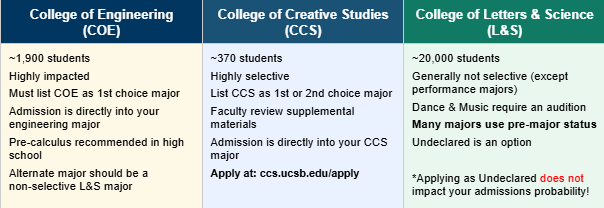
What Is a Pre-Major? (UCSB Letters & Science Only)
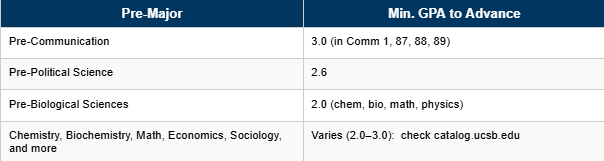
Many high-demand L&S departments admit students as pre-majors rather than directly into the major. Being admitted as a pre-major does NOT make your admission conditional. You are fully admitted to UCSB. However, advancing into the full major requires work after you arrive.
Complete required introductory courses with no grade below a C-
Earn the required GPA in those courses (typically 2.0–3.0, varies by department)
Submit a Change of Major petition once you meet the requirements
Pre-Majors with GPA thresholds include:
Engineering Majors (COE)
Available majors: Electrical Engineering, Mechanical Engineering, Civil Engineering, Computer Science, Computer Engineering, and a newly announced Artificial Intelligence major.
Important: You must select Engineering as your 1st choice major. Changing into COE after enrollment is competitive and space-limited.
💡 Key Takeaways for Applicants & Parents
This is the smallest College of Engineering in the UC system. Check if it has your interests!
COE & CCS admit you directly into your major.
L&S pre-majors = fully admitted to UCSB, but must still earn your way into the major.
CCS requires a separate supplemental application that is reviewed by faculty.
Dance & Music majors (L&S) require an audition.
Full catalog & major requirement sheets: catalog.ucsb.edu

Why Summer Is the Best Time to Start Preparing for College Application
Why Summer Is the Best Time to Start Preparing for College Applications
A Head Start Makes the College Application Process Easier
For many families, the college application process seems to arrive suddenly during senior year. Essays, recommendation letters, deadlines, and school lists can quickly feel overwhelming for both parents and students. How can you prepare now to avoid increased senior year stress?Students who begin college application preparation during the summer before senior year can avoid much of the senior year anxiety around college applications! Instead of rushing through important decisions, you and your student have time to reflect, explore options, and prepare thoughtful applications.Starting early does not mean completing every application months in advance. It simply means using the summer strategically to plan and prepare so that the fall application season is in your control and is thoughtfully based on your student’s fall school schedule and commitments. This way your senior student can have time to enjoy their final year of high school!
Reflection and Self-Discovery
One of the best advantages of college planning is your self-reflection.Admissions officers are not just reviewing your grades and test scores. They want to understand a student’s interests, goals, and personal story - for most colleges, you are reviewed ‘holistically’ and not just by your statistics. That type of reflection needs time when students are not juggling homework, sports practices, and extracurricular commitments.During the summer, students often have more time to think about questions such as:What subjects or activities genuinely excite me (WHY am I going to college)?What type of college environment would help me thrive as a student and as a person?Which experiences have shaped who I am?This reflection becomes especially helpful when students begin brainstorming their college application essays. Self reflection will allow your student to write in their authentic voice and highlight key points of their personality and strengths.
Building a Thoughtful College List
An important step in college application preparation is taking time to create a balanced college list.This process takes research that focuses on the student’s individual needs. Students and families should research academic programs, campus culture, and financial considerations. Each college can offer different benefits and while one college fits your friend or parent’s goals, it may not fit your needs. Academic factors: First, look at the majors offered at each college under consideration (not EVERY college offers all majors!). Then, think about how your student studies best (will they stay focused in primarily large classes of 150+ students, or do they do best with smaller classes where the professor knows who they are and can discuss questions with them)? Financial considerations: Have a discussion now about your expectations around what is reasonable for your family. Now is the time to talk, rather than AFTER applying! College Culture and Social Fit: How do you see yourself getting involved at this college - what do you do now for fun, or what are you looking forward to doing at this college? Look at clubs & organizations within your field of study or based on your hobbies and interests! Is it time to pick up a new sport or learn to knit with others? Your ‘social plan’ is as important as your academic plan - it helps you picture yourself at this college and how you will find ‘your people’ to build community! For many families, this research stage also reveals just how complex college admissions planning can be. Having guidance during this phase can help your dialogue be more productive and focused on your student’s self-reflection on their goals.
Preparing Materials Before the Fall Rush
Students who begin college application preparation early can also organize important materials before deadlines start approaching.Summer is an ideal time to:Create a resume of activities and accomplishmentsBegin brainstorming essay topics and schedule their writing goalsOutline application timelinesTogether, these steps create momentum and self-confidence. When fall arrives, students who have already completed these tasks often feel far less pressure than those who waited to do most of their college preparation starting in their senior year.
Family ‘College Sanity’ Tips - Weekly College Talk time
The college admissions process can sometimes lead to tension between parents and teens. Questions about deadlines, expectations, and future plans can easily turn into stressful conversations. One tip to reduce the ‘college process’ stress is to plan for a weekly time to talk about college-related activities and questions. Plan for a time when both parents and the student are available and not rushed - and keep it consistent. And, maybe make it fun like going out for frozen yogurt or a walk afterwards. Take the pressure off! The big tip to avoid stress and strain on family dynamics is to NOT talk about college all the time during the week. Save it for the weekly discussion. Give your student some breathing room (and yourself!) around the college-going plans. And the next tip is to start in the summer before senior year! It takes time to create discussion foundations that lead to discovering a student's expectations and college goals. When families approach college application preparation during the summer, they create space for thoughtful discussions rather than last-minute decisions. Students can explore their interests, and parents can feel more confident that important steps are being worked on with thoughtfulness and care.
Final Thoughts
Summer offers a valuable opportunity for students to begin preparing for college applications in a calm and thoughtful way. Families who start early often discover that the college admissions process becomes far less overwhelming.If you would like guidance on how to approach college planning and avoid common mistakes, this is a great time to start.Learn more about how early planning can support your student’s college journey:https://www.aroadmapforcollege.com/
Compliance Note:This content was created in 2026. Requirements, deadlines, and regulations may change. Always verify current guidelines through official sources before taking action.

Letters of Recommendation - What Teachers wish Students Knew…
Letters of Recommendation - What Teachers wish Students Knew…
Why Letters of Recommendation Matter
For many students and families, the college application process can feel like a checklist of forms, essays, and deadlines. But letters of recommendation add something unique to an application. They provide insight into how a student learns, participates in the classroom, and contributes to a school community.A thoughtful college recommendation letter can reinforce a student’s strengths and help admissions officers see the person behind the transcript. However, the quality of these letters often depends on how students approach the request in the first place.Teachers want to support their students. But there are a few things educators consistently wish students understood about requesting letters of college recommendations.
Teachers Appreciate Early Requests
One of the most common mistakes students make is waiting too long to ask for a recommendation.By the start of senior year, many teachers have already received dozens of requests for college recommendation letters. When students ask at the last minute, teachers have limited time to write thoughtful and detailed letters or may have reached their limit. Remember, most teachers are not paid for the time they take to write letters for students. Please be considerate of their time!Ideally, students should approach teachers in early fall or even late spring semester of junior year to ask about their deadlines and letters process. Following a teacher’s letter-writing schedule allows them to have time to reflect on the student’s growth and write a stronger recommendation. Check with each teacher or with your College & Career center for your school’s process, ideally by the end of junior year.
Teachers write about more than Your Grade - who are you?
A teacher may remember a student’s performance in class, but they may not know everything about that student’s interests, achievements, or goals.This is why many teachers appreciate it when students provide a brief resume or “brag sheet” when requesting a letter of recommendation for college applications. Helpful information might include why the following are important to you and what you’ve learned from any of these roles:Extracurricular activitiesLeadership rolesVolunteer work or community involvementProviding this context in addition to your future college goals (what do you want to achieve from going to college?) helps teachers write more detailed and personalized recommendation letters and helps them tie their classroom observations to who you are outside the classroom!
Thoughtful Requests Make a Difference
Teachers also notice how students ask for a recommendation.A respectful and thoughtful request goes a long way. Students should ask politely, in person or through a well-written email message, and give the teacher the option to decline if they feel they cannot write a strong letter.Teachers appreciate when students:Provide clear deadlines (and know the teacher’s deadlines, too!)Share college application details (what colleges are you applying to, what major?)Offer helpful background informationExpress gratitude for the teacher’s time and effort (teachers don’t get paid often for this extra work!)These small steps demonstrate the student’s maturity and professionalism, which may strengthen the overall college recommendation letter.
Letter of Recommendation Letter Tips
Plan ahead for letter deadlines: In the last part of junior year, find out about your school’s deadlines for recommendation requests. Or, each teacher may have their own process - ask!Ask a teacher who can speak meaningfully about your academic abilities or character. Think about how each of your classes - where have you been most engaged or interacted with the teacher?Prepare ahead of time and choose the right teacher(s). Students will then have their letters of recommendation support the strength of their college application!
Final Thoughts
Requesting letters of recommendation is an important step in the college admissions journey. When students approach teachers early, provide helpful information, and choose recommenders who know them well, the results are often much stronger. You will probably only need one or two teachers!A thoughtful recommendation letter can highlight a student’s curiosity, work ethic, and growth in ways that grades and test scores cannot.If your family wants guidance on how recommendation letters fit into a broader college admissions strategy, this is a great time to start the conversation so that your student can plan for this step!Schedule a quick conversation to learn how to approach recommendation letters and other key steps in the college planning process:https://calendly.com/audrey-arfc/introductory-call-15-min
Compliance Note:This content was created in 2026. Requirements, deadlines, and regulations may change. Always verify current guidelines through official sources before taking action.

How to Choose the Right Teacher for Your College Letter of Recommendation
How to Choose the Right Teacher for Your College Letter of Recommendation
Why the Right Teacher Matters
Letters of recommendation are one of the few parts of a college application that give admissions officers a personal perspective on a student. Grades, test scores, and activities show accomplishments. A college recommendation letter shows character, curiosity, and how a student contributes in the classroom.
But not all recommendation letters carry the same weight.
A thoughtful, detailed letter of recommendation for college can reinforce a student’s strengths and provide context that transcripts alone cannot. On the other hand, a vague or generic letter may not add much value to the application. Choosing the right teacher to write that letter is an important step that families often underestimate.
Look for Teachers Who Know the Student Well
A common misconception in the college admissions process is that students should ask the teacher with the most impressive title or the toughest class.
In reality, admissions officers value letters written by educators who truly know the student. A teacher who has seen a student grow academically, ask thoughtful questions, or contribute meaningfully to discussions can write a much stronger letter that will help a university admissions officer picture how this student will contribute to their college classes.
Students should ask themselves:
Which teacher saw my work ethic and curiosity firsthand?
Who observed how I handle challenges or setbacks?
Who can speak honestly about my character and strengths?
A teacher who knows the student well can provide a strong recommendation letter for college rather than a short, generic note that adds little insight.
What class subjects are best for letters of recommendation?
Many colleges request recommendation letters from core academic subject teachers, particularly those in areas such as English, math, science, or history.
These teachers can often comment better on how a student performs in an academic setting, how they approach complex material, and how they discuss ideas. That perspective can be especially helpful for college admissions officers trying to evaluate a student’s readiness for college-level coursework.
This does not mean students must choose the teacher who gave them the highest grade. In fact, a teacher who watched a student improve over time may write a more compelling college recommendation letter than one who only saw easy success.
Should I ask my teachers from Junior Year?
Teachers from 11th grade are often strong choices because they have worked with the student more recently in advanced coursework.
These teachers may have seen the student collaborate with peers or demonstrate leadership in class. That recent experience can help them write a more relevant letter of recommendation.
Students who build interactive relationships with teachers during junior year often find it much easier to request recommendation letters.
TIP: ask by May of junior year if your teacher has a letter of recommendation list or form you may need to fill out. Then, you can complete it during the summer before senior year!
What are Common Recommendation Letter Mistakes?
A few common mistakes include:
Waiting until October of senior year, right before college applications are due.
Teachers receive many requests or may have deadlines/cutoffs for letters. Avoid missing a deadline - ask early about your teacher’s letter of recommendation process, if they have a cutoff and if they are willing to write you a letter. Remember, teachers do NOT get paid for this extra work, so it is up to them on how many letters they are willing to write.
Choosing someone who barely knows the student.
A well-known teacher, celebrity friend of the family or school administrator may sound impressive, but if they cannot speak personally about the student and their classroom strengths.
Not providing enough helpful information.
Students (and if the school allows, parents too may have a ‘brag sheet’ they can fill out) should offer a short “brag sheet” outlining activities, accomplishments, and college goals. This helps teachers write a more thoughtful recommendation that is personalized to the student.
Avoiding these mistakes can help ensure that the college recommendation letter strengthens your college application!
Final Thoughts
Choosing the right teacher for a college letter of recommendation is about authenticity. The strongest letters come from educators who understand the student’s academic journey and can describe their recent growth, character, and contributions.
When students choose their recommenders thoughtfully and provide helpful background information, the result is a letter that truly supports their college application.
If your family has questions about recommendation letters or other parts of the admissions process, now is the perfect time to get clarity before application season! Learn more about how early planning can reduce stress and help students & families make stronger college choices:https://www.aroadmapforcollege.com/
Compliance Note:This content was created in 2026. Requirements, deadlines, and regulations may change. Always verify current guidelines through official sources before taking action.

Creating a College List That Fits the Student
Creating a College List That Fits the Student
How Personality, Values, and Lifestyle Shape the Right Campus Experience
Once the academic foundation is clear, the next step is evaluating how each college aligns with the student as a person. Campus fit often determines whether a student feels motivated, supported, and connected. While academics open the door, personal fit keeps students engaged and successful through graduation.This part of college list building is where students can explore what inspires them, what environments help them thrive, and what they want their day-to-day college life to be like.
Why Personal Fit Matters
Personal fit influences self confidence, motivation, and overall student well being. Even the strongest academic program may not work if the environment feels overwhelming, isolating, or mismatched with the student’s personality or lifestyle. Families should explore:
• Social environment (what do students do on the weekends?)
• Campus culture and energy
• Diversity and community feel (both on and off campus)
• Academic flexibility and support needs
• Opportunities to join clubs, organizations, or service programs.
Students often discover that what they imagined and what they actually prefer are very different. Visit colleges and make time to feel the differences. Making room for those realizations helps build a more authentic list where the student is excited to apply!
Understanding Lifestyle Preferences
Lifestyle components play a major role in a student’s long-term success and should be part of every college conversation. Some factors to consider are:
• Urban vs. suburban vs. rural environments
• Distance from home
• Housing style and comfort
• Dining, accessibility, and student life resources
• Climate preferences
• Campus layout and transportation.
These factors may seem small at first, but they have a meaningful impact on a student’s daily life, mental health, and academic performance. Is this where they see themselves thriving and relating to others?
Matching Personality With Environment
Students should consider how their personality aligns with the campus vibe. For example:
• Some students may thrive in smaller environments with strong academic and career advising (is it easy to meet with your academic advisor? Are they accessible? How large are the average class sizes?)
• Other students may prefer larger campuses with more student activities options (is your student one that can advocate for themselves, ask for help?)
• Hands-on learners may prefer institutions with co-ops, internships, or project-based programs.
• Highly structured learners may benefit from colleges with clear academic pathways.
When families acknowledge their student’s personality as part of the list building process, students develop a clearer picture of where they will feel supported and inspired. Keep talking!
Avoiding Common Fit-Related Pitfalls
Some misleading directions that some parents and students follow:
• Choosing a school based on friends’ interests (or other what other parents like)
• Overprioritizing name recognition of a college
• Assuming ‘bigger means better’ for college opportunities
• Ignoring mental health and support resources
• Choosing an environment that doesn’t match the student’s personality or academic needs
• Overestimating a student’s comfort in unfamiliar settings.
A student-centered list prevents these missteps and supports long-term success for YOUR student. Allow them to create their vision and they will be more likely to thrive in college!Compliance note:This content was created in 2026. Requirements, deadlines, and regulations may change. Always verify current guidelines through official sources before taking action.
Ready to Build a College List Focused on Real Fit?
Personal fit is the key to building a list your student will feel excited about and not just obligated to consider. If your family wants guidance on understanding personality fit, campus culture, and long-term student alignment, now is the right time to begin. Spaces are limited - so plan now for a summer start!Start your planning with an introductory call:https://calendly.com/audrey-arfc/introductory-call-15-min

University of Arizona - Tucson, AZ
University of Arizona - Tucson, AZ
Welcome to College Knowledge in 5 Minutes!
Become a more informed college consumer and make better decisions for your college selection process
Every Thursday, look for a new Roadmap4College College Knowledge post!
University of Arizona - Tucson, AZ
Public land grant university with unique research opportunities in sciences and business with a nationally ranked Honors College
Fun facts
Over 40% of students are from out of state Out of State Student Guide
Their motto, ‘Bear Down’, comes from their 1926 quarterback’s inspirational last words to his team.
University of AZ’s football team is now part of the Big 12 conference
Academics - Admissions
Updates (changes within last 2 years!)
1- Early Action deadline of Nov. 1st
U of AZ used to be a rolling admissions, fairly ‘accessible’ public university with generous merit scholarships. However, with financial budgetary constraints in the last few years, the new President moved more scholarship awards to AZ students. So, use their Net Price Calculator (available soon for next year) and evaluate your financial fit!
2- U of AZ has a supplemental essay
The ‘Why Univ. of AZ” 500 word (max) essay that is ‘optional’, but really must be done to be considered. The University of Arizona’s “Why AZ” is reviewed for fit to major, but the optional Common Application essay may also be used for context only (student circumstances, etc..).
3- Core Competency Requirements
There are mandatory HS courses (note math requirement - 4 years and 3 years - lab science)!
Additional Math needed:
Eller College of Management (business school) - AP Statistics and AP Calculus strongly recommended
College of Engineering - Calculus A/B strongly recommended
Unique Majors/Programs
The SALT Center (Strategic Alternative Learning Techniques)
SALT is a co-curricular academic support program for students with learning differences. It is not the Disability Resources Center (which handles ADA accommodations). SALT offers learning specialists, tutoring, structured academic support, and dedicated facilities and serves over 800 students. NOTE: there is an additional fee for this student service.
Top Research in Sciences
NASA funded activities - top 5 in US plus access to telescopes (Kitt Peak, Steward Observatory)
Biosphere2 - a 3+ acre lab site that studies earth systems science applications (take a virtual tour)
Water Science - top 5 in Hydrology and Water Resources management
Direct BSN - Nursing
Nursing major is now Direct Admit as of Fall 2025! You only have one chance to gain admission to Nursing - freshman year.
18 different undergraduate majors, including a Business Engineering major. And, you can apply later to transfer into the College of Engineering while at University of AZ (certain prerequisites and min. GPA requirements).
Campus Culture and Sports
A wide variety of 500+ clubs and organizations
Basketball team ranked top 5 for 2026 NCAA
Building a Smart, Balanced College List
Building a Smart, Balanced College List
How Planning Shapes the Ideal College Options
A strong college list starts with clarity, structure, and reliable academic criteria. Before your visit to a campus, students and parents benefit from data-driven research. A well-built academic foundation ensures that the student’s list before they apply is realistic, balanced, and aligned with their interests and style of learning.
This approach simplifies the college search and helps families avoid the most common frustrations: guesswork, scattered research, and relying on name-brand schools with mismatched expectations. Your student can succeed at any college if you all agree clearly on why it’s an ideal fit for them.
Understanding the Role of Academic Fit
Academic fit is often the most straightforward piece of the college planning puzzle, yet it is the one many families overlook. A strong academic fit ensures that the student can feel supported and thrive in that college.
Key considerations include:
• GPA and transcript strength (based on what is available at their high school)
• Grade trends and course rigor
• Test score strategy
• Admission data and selectivity ranges
• How the student’s academic profile compares with prior admitted students
This process is not about limiting possibilities. Instead, it helps the student and their family identify realistic reach, match, and likely options that reflect the student’s strengths and decreasing disappointment from unrealistic expectations. Use the data to have conversations together about how the student would fit in this college.
Program Strength and Major Exploration
Academic compatibility extends beyond GPA and statistics. Students should examine:
• The strength of specific majors
• Access to internships or co-ops
• Research opportunities
• Academic advising quality
• First-year support programs
Even undecided students should understand how each college supports major exploration. A flexible academic environment can reduce stress and encourage long-term success. For example, if a student wants to explore majors or perhaps double major in college, does this college offer that flexibility? How difficult is it to switch majors? Some colleges are known for getting students right into their major which is exciting for those who know what they want to study. But, for students who want time to explore a variety of majors, this may not be the ideal academic setup for their needs. What does YOUR student need?
Data That Helps Build Clarity
Families often find themselves overwhelmed by rankings or marketing language. More reliable indicators include:
• Graduation rates (look both by university totals and by major, if offered)
• Retention rates (do students return after freshman year?)
• Job placement and career outcomes (who comes to their Career Fairs?)
• Student-to-faculty ratios (if your student thrives in classes where they can discuss their ideas, why go to a large university with lecture halls that seat 200+ students?)
• Advising and tutoring availability
• Financial support or merit aid scholarships (note that not all universities offer merit aid - see Feb. 18th blog on Financial Aid for more info)
Using these markers helps avoid unintentional bias toward highly selective universities or relying on outdated admissions patterns. Stay current on college trends!
Compliance note:
This content was created in 2026. Requirements, deadlines, and regulations may change. Always verify current guidelines through official sources before taking action.
Building a Balanced and Strategic List
A strong list usually includes:
• A few reach schools
• Several match schools
• Several likely schools
• At least two financial and academic safety colleges (that the student would genuinely like to attend after their research!)
Balance protects students from stress and anxiety. It also helps parents feel confident that every college on the list supports the student’s academic goals and has been discussed regarding financial viability for the family budget. Please - do this now. Do not wait until AFTER college admissions are received in March of senior year to discuss family acceptance of the college list. March of senior year should be one of celebration and joy for the student and family! It will be a special time if you make time for discussion and research about the college list before applying.
Ready to Build a Data-Driven College List?
Families often spend months gathering information that could be simplified into a clear, customized plan. Would you like help in clarifying your data? If you want expert support building an academic strategy that reduces stress and supports smarter decisions, now is the time to start. Early planning creates more joy and helps you plan for a more celebratory senior year!
Take the next step by visiting:
https://www.aroadmapforcollege.com/
Making the Most of College Visit
Making the Most of College Visits
Turn Campus Tours Into Real Insight
College visits are one of the most valuable steps in the college planning process. They help students move beyond brochures and websites and feel the ‘campus vibe’. For parents, visits offer clarity on environment, support systems, safety, and long-term fit for their student’s needs. When approached with intention, a campus visit is far more than a walk across the quad. It becomes an experience that informs smart decision-making and dialogue for the entire family.
This guide offers strategies to help students use college visits to build confidence in understanding what best fits their goals.
Why College Visits Matter
A strong campus visit gives students a sense of belonging, motivation, and direction. It also helps families avoid “decision regret” later by providing real insight into academic expectations, campus culture, and student life.
Some students do not immediately feel comfortable on tours, especially if campus environments feel unfamiliar. Others feel overwhelmed by how different each school appears. Momentum increases when families approach visits with clear goals instead of simply checking boxes.
During your campus visit, parents and students should look for:
• How students interact with each other
• What academic support looks like for first-year students
• Whether the campus feels safe, welcoming, and manageable
• Access to advising, tutoring, or major exploration resources
• How well the school aligns with the student’s long-term goals
Structuring a Visit With Purpose
A common misconception is that families must visit dozens of colleges around the country. In reality, focused and intentional visits with 3-5 local colleges are far more effective. Start by choosing a variety of colleges within an hour's drive from home based on size, setting, and academic offerings so students can compare different learning environments.
During each visit, students should:
• Sit in on an Admissions info session (if available)
• Pay attention to the vibe in common spaces- eat at the cafeteria, and people watch
• Ask current students about workload and academic expectations - ask to be paired with a student who works in the Admissions office who may be from your area or is in your intended major
• Evaluate dining, housing, and classroom environments
• Reflect on how the campus makes YOU feel (not just parents, but you, the student)
Parents should observe from a distance, giving their student space to form independent impressions while still supporting the experience. This helps reduce pressure while encouraging confidence. It’s ok if your student doesn’t want to ask questions - it may take a few visits to get the courage up to interact.
Using Virtual Tours When Travel Is Limited
Not all families can travel (even locally), and not all visits need to be in person. Virtual tours, student panels, and admission webinars provide accessible, evergreen opportunities to explore what different colleges offer. They can allow students to narrow their list before scheduling in-person tours to save time and money. But, it is very important to have SOME college visits before finalizing your college list. This helps the student focus their time on colleges they truly have an interest in to attend, should they be accepted. And, families should discuss college fit so that everyone has the same goals in mind before applications and time is invested by the student.
Some students feel more comfortable first asking questions online, while parents can listen for details about financial aid, academic offerings, and application expectations during online sessions or through the college’s website.
Compliance note:
This content was created in 2026. Requirements, deadlines, and regulations may change. Always verify current guidelines through official sources before taking action.
College Visit Research done - what now?
Students often struggle to articulate why they prefer one school over another. Families can use a simple reflection process after each visit to help students identify what mattered most.
Key questions include:
• What felt exciting or motivating - where do they see themselves getting involved?
• What felt uncomfortable or unclear - are there questions that still need to be answered?
• Did the academic environment match their learning style - team projects, large or smaller class sizes, hands-on learning opportunities?
• Whether they could imagine themselves succeeding there - did you see support systems for academic, emotional, and career development?
Encouraging open discussion helps students avoid making decisions based solely on name recognition or where their friends are applying. Write down impressions right after every visit - colleges do start to blend together!
Ready to Start Planning Meaningful College Visits?
A strategic visit plan can save time, reduce confusion, and increase student clarity. If your family wants guidance on which colleges to visit, how to structure your tours, or how to evaluate what you’ve learned, now is the right moment to get support. Early planning gives your student a clear advantage and helps avoid last-minute stress.
To take the next step and get expert direction, schedule a quick introductory conversation:
https://calendly.com/audrey-arfc/introductory-call-15-min

Oregon State University (OSU - Go Beavers!)
Oregon State University (OSU - Go Beavers!)
College Knowledge in 5 Minutes!
Become a more informed college consumer and make better decisions for your college selection process
Every Thursday, look for a new Roadmap4College College Knowledge post!
Oregon State University (OSU - Go Beavers!)
Top for Research: OSU is only 1 of 3 universities in the US that hold all four grant designations: land, sun, sea, and space. Why does that matter? OSU is top for research initiatives which helps you explore more career opportunities!
Fun Facts:
50% of the students are from out of state
No additional essays: Apply to OSU via the Common App and only the main essay is required!
Unique majors: Ecological Engineering, Sports Business, Design & Innovation Management, and Apparel Design.
SAVE $$$: OSU is a WUE college for many CA students!
About 30% of CA applicants receive the WUE scholarship - your OSU tuition cost is very near the University of CA (UC) cost with no impacted majors, majority of classes between 25-60 students, and Pac 12 football!
Building Momentum and Testing
Building Momentum and Testing
How Students Can Prepare With Confidence While Parents Stay Informed
Preparing for college entrance testing is not only about earning strong scores. It is also about building consistent academic momentum, reducing stress, and positioning students for long-term success. Both parents and students play meaningful roles in this phase, especially as testing expectations evolve and competition for top programs increases.
This guide offers a balanced, evergreen look at how to approach momentum-building and testing to support confidence, strategy, and steady progress.
Why Momentum Matters Long Before Test Day
Momentum is built through consistent habits, not last-minute marathons. Students who create small, repeatable routines often see stronger results and lower anxiety. This is especially helpful for students who worry about testing performance, feel behind compared to peers, or struggle with motivation.
Momentum may show up as:
• Regular study sessions instead of binge-studying, focused on key areas to improve
• Reviewing mistakes to understand patterns
• Weekly practice tests that boost familiarity with test timing and increase students’ confidence
• Setting realistic weekly goals and room for flexibility (life happens!)
• Tracking progress to boost self-confidence
Parents can support this by providing structure, reducing pressure, and helping students prioritize healthy routines with balance. Many families find it helpful to treat momentum as skill-building rather than score-chasing, which helps students stay engaged over time. These skills will help your student’s academic performance and aren’t just for the test!
Understanding the Evolving Testing Landscape
The testing world continues to shift, and families often feel caught between old expectations and new options. Some colleges are test-optional, some require scores for specific programs or scholarships, and others strongly recommend them. Checking yearly with each college is important, as colleges have been changing their requirements.
To avoid confusion, students and parents should focus on:
• The student’s strengths and whether scores can enhance their application
• Scholarship requirements that may still rely on test scores
• How test-optional policies affect different majors or competitive tracks
• Building a strategy that includes practice testing at least once (even when unsure about submitting scores)
A common misconception is that students no longer need to test. In reality, strong scores could enhance your student’s academic profile or open scholarship doors, even in a test-optional landscape. But, the #1 factor in admissions will always be your student’s academic record, so staying strong with activities and academic coursework is the top priority. After that, carefully weigh your student’s ability to carry thoughtful test preparation within their schedules before scheduling a test in their future.
Compliance note:
This content was created in 2026. Requirements, deadlines, and regulations may change. Always verify current guidelines through official sources before taking action.
Balancing Academics, Activities, and Preparation
Parents often worry about overloading their students’ schedules, while students worry about falling behind their peers. Finding the right balance can be easier when the testing timeline is intentional rather than reactive.
A thoughtful preparation plan may include:
• Evaluating extracurricular commitments during heavy study weeks - balance the load
• Taking the PSAT first to evaluate potential testing strengths
• Using summer or school breaks as strategic windows for test prep focus
• Encouraging students to take ownership of their schedule while maintaining support
Students who understand why the plan matters are more likely to stay engaged. Parents can reinforce the bigger picture: testing is just one part of a much larger college-readiness journey and the way colleges view their overall portfolio.
Turning Testing Into an Opportunity
Testing does not need to be a negative, high-pressure experience. When students build momentum with intention, they gain valuable skills that translate beyond college admissions. These include time management, endurance, problem-solving, and developing resilience under pressure.
Testing can become an opportunity to build confidence, clarify academic strengths, and approach the college process with a stronger sense of control.
Ready to Build a Plan That Works?
Families often do their best on their own but still feel unsure whether the strategy they’re using is the right one. If you want clarity, guidance, or a momentum-building plan tailored to your student, now is the time to take the next step. Spots fill quickly, and starting early gives your student the strongest advantage.
To get personalized insight and practical next steps, email

Worcester Polytechnic Institute - The 'GOAT' (their mascot, really!)
Worcester Polytechnic Institute - The 'GOAT' (their mascot, really!)
Welcome to College Knowledge in 5 Minutes!
Become a more informed college consumer and make better decisions for your college selection process
Every Thursday, look for a new Roadmap4College College Knowledge post!
Worcester Polytechnic Institute - The 'GOAT' (their mascot, really!)
Two New Majors
WPI has new majors this year - Bachelor of Science degrees in Cybersecurity and Artificial Intelligence. While these are new degree offerings, both areas have deep roots at WPI. Cybersecurity research dates back to the 1990s, and AI research even earlier. The AI program includes machine learning, deep learning, generative AI, autonomous AI, and AI ethics.
R1 Research & Innovation
WPI invested $66 million in research expenditures last year, and all students graduate with research experience built into their degree requirements. It’s also common for students to pursue additional research beyond what’s required. Since 2016, WPI faculty and students have earned 70+ patents, launched 25 startups in the past decade, and helped raise over $1.7B in capital - including innovation in AI-driven healthcare and climate technologies.
Admissions Context
Test Optional, NO HARM policy - while approximately 59% of applicants this year have submitted test scores, WPI only uses your score to HELP you. You will not be penalized for submitting a score lower than their mid 50 percentile.
WPI was ranked #39 on LinkedIn’s inaugural 2025 Top Colleges list, highlighting strong outcomes in career placement, internships, and recruiter demand.
Next, College Knowledge will focus on Oregon State University!